Can an AI Really Handle Emergency Calls? Here’s What You Need to Know
Can an AI Really Handle Emergency Calls? Here’s What You Need to Know
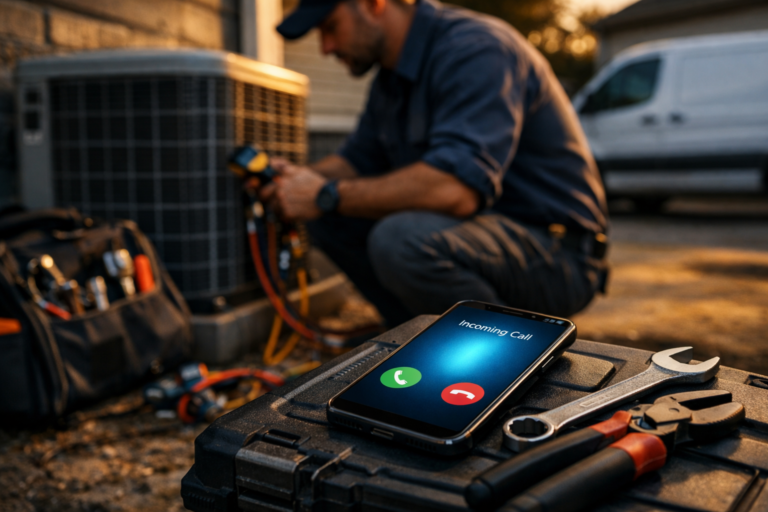
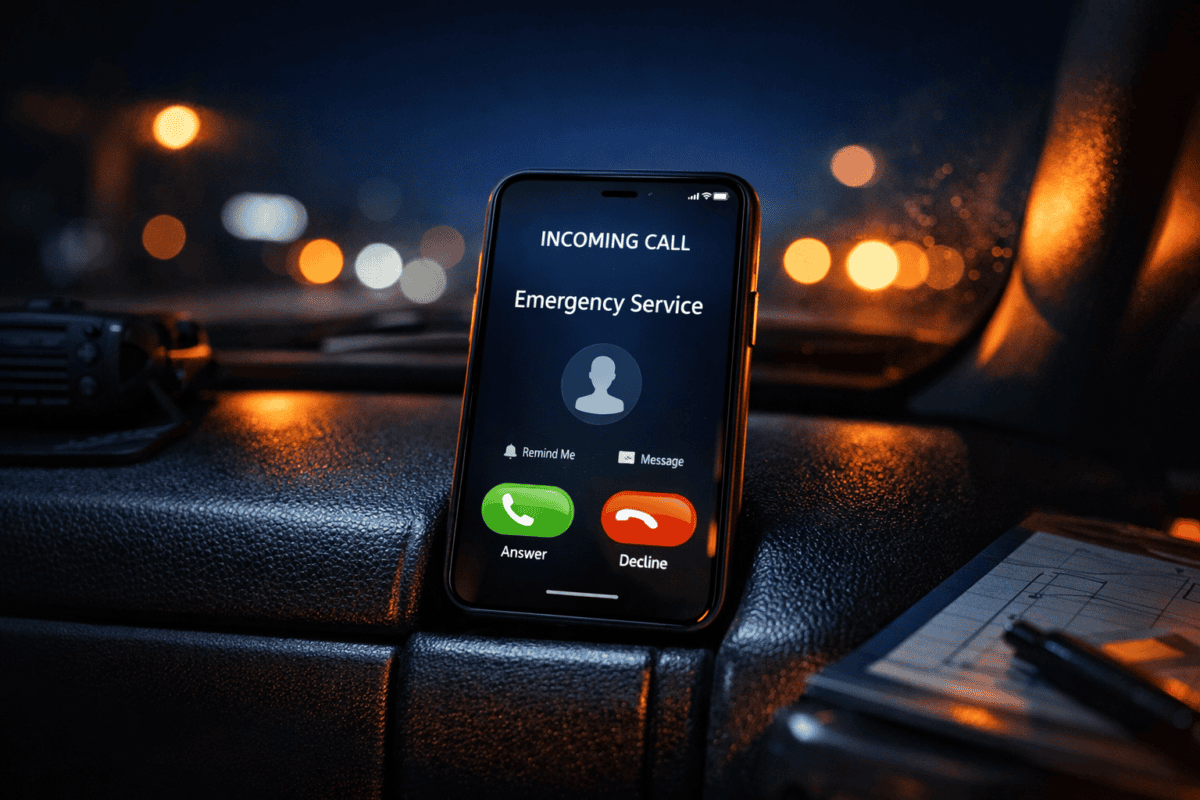
It’s 2 a.m. on a Tuesday. A commercial property manager has a busted water main flooding their parking garage. They call your shop because you did great work for them last year. The phone rings. And rings. And goes to voicemail.
By sunrise, they’ve hired someone else.
Emergency calls are the lifeblood of trades businesses. They’re high-value jobs with motivated customers who need help right now. But here’s the problem: you can’t answer the phone when you’re elbow-deep in a furnace repair, up on a ladder, or trying to get six hours of sleep. And hiring a full-time answering service? That’s expensive, inconsistent, and still doesn’t guarantee the call gets handled right.
So when someone tells you an AI can handle emergency calls, you’re probably skeptical. And you should be. This isn’t about replacing your judgment or your crew. It’s about making sure you never miss the call in the first place.
What Makes Emergency Calls Different
Not every call is created equal. When someone calls about scheduling a maintenance appointment next month, that’s straightforward. But emergency calls? They require quick assessment, clear communication, and immediate action.
Here’s what a good emergency call handler needs to do:
- Recognize urgency signals—flooded basements, no heat in winter, electrical sparks, active leaks
- Ask the right qualifying questions without wasting time
- Capture accurate callback information and location details
- Get the information to you or your on-call tech immediately
- Reassure the customer that help is coming
That’s a tall order for software, right? That’s why most answering services just take messages and promise someone will call back. Which defeats the entire purpose when a panicked homeowner needs help at 11 p.m. on a Saturday.
How AI Emergency Call Routing Actually Works
The key word here is routing, not replacement. AI emergency call routing doesn’t make decisions about whether you take the job or how you price it. It makes sure the call gets to you with all the details you need, exactly when it matters.
Here’s what happens when an emergency call comes in:
Recognition: The AI listens for specific keywords and context that signal urgency—words like “flooding,” “no heat,” “sparking,” “gas smell,” or “burst pipe.” It’s not just keyword matching, though. Modern AI understands context. If someone says “my basement has three inches of water and it’s rising,” that’s flagged as critical.
Qualification: The AI asks targeted questions: What’s the problem? Where’s the property located? Is it residential or commercial? Is anyone in danger? These aren’t scripted robot responses—they’re conversational and adapted based on what the caller says.
Immediate Notification: Once the AI confirms it’s an emergency, you get notified instantly. Text message, phone call, email—however you need it. You’re not waiting for someone to check messages in the morning. You get the details in real time, while the customer is still on the line if needed.
Customer Reassurance: While you’re being notified, the caller isn’t left hanging. The AI confirms their information, lets them know a tech will contact them shortly, and provides a realistic timeframe. That alone separates you from competitors who let calls go to a generic voicemail.
What About False Alarms and Nuisance Calls?
Valid concern. You don’t want to get woken up at 3 a.m. because someone scheduled a routine appointment and said the word “urgent” in passing.
Good AI emergency call routing includes filtering. It distinguishes between “I need someone this week for sure” and “my heat isn’t working and it’s 20 degrees outside.” The system learns what your shop considers an emergency based on how you configure it.
You set the rules: geographic service area, types of jobs you take after hours, commercial vs. residential preferences. The AI applies those rules consistently, every single call. No judgment lapses. No “I’ll just take a message because I don’t want to bother the boss.”
The Real Test: Does It Work When It Counts?
Let’s be honest. You’re not worried about the AI handling a routine Tuesday morning call. You want to know if it’ll handle the call that actually matters—the emergency that could turn into a $3,000 job or a long-term commercial client.
The difference comes down to how the AI is trained and whether it’s built specifically for trades businesses. A generic chatbot programmed for e-commerce won’t cut it. You need something that understands your industry, speaks your customers’ language, and knows what information you actually need to dispatch a truck.
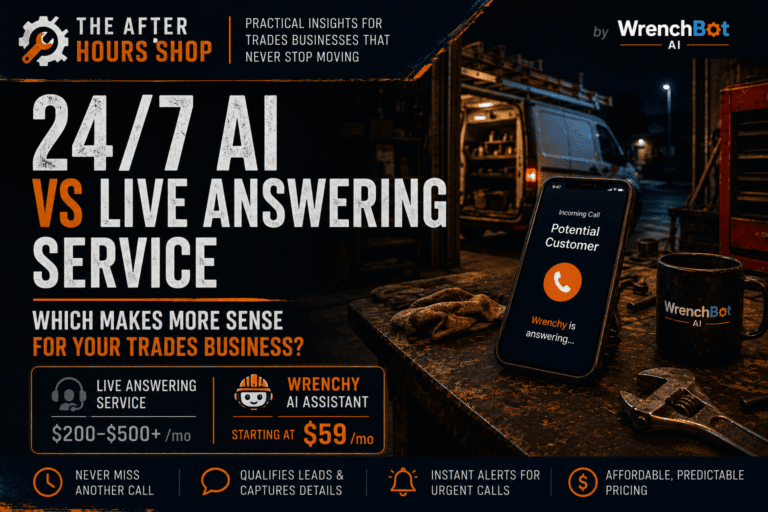
That’s where having an AI agent like Wrenchy makes the difference. He’s not trying to be a Swiss Army knife for every industry. He’s built to handle calls for plumbers, HVAC techs, electricians, and roofers. He knows what a P-trap is. He understands why “no AC in July” is urgent and “my outlet cover is loose” probably isn’t. He asks the right follow-up questions because he’s trained on thousands of trades-specific calls.
More importantly, Wrenchy works with you, not instead of you. He’s not making promises about pricing or availability you didn’t authorize. He’s gathering information, routing it to you, and making sure the customer knows they’ve reached a professional operation even if you’re not physically holding the phone.
Stop Losing Emergency Jobs After Hours
Here’s the bottom line: emergency calls are too valuable to miss, and you can’t be available 24/7 without burning out or hiring a full-time answering service that costs a fortune.
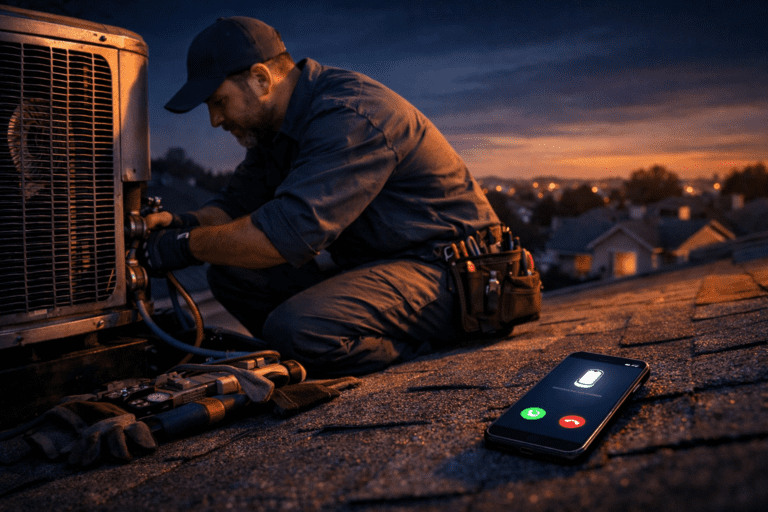
AI emergency call routing solves that problem. It makes sure every call gets answered, every emergency gets flagged, and you get notified immediately with all the details you need. Your phone works for you even when you’re on the roof, in the crawl space, or sound asleep at 2 a.m.
Does it take some getting used to? Maybe. But so did using a smartphone instead of a paper schedule book, and you probably can’t imagine running your business without one now.
The shops that figure this out first are the ones answering every call while their competitors are still letting half their leads go to voicemail. That’s not a small advantage. Over a year, that’s dozens of jobs. Maybe more.
Put Wrenchy to Work in Your Shop
If you’re tired of missing calls and losing jobs because you can’t answer the phone 24/7, it’s time to meet Wrenchy. He’s the AI answering agent built specifically for trades businesses, and he handles every call like a trained member of your crew—qualifying leads, booking jobs, routing emergencies, and keeping you in the loop in real time.
WrenchBot AI offers a 14-day free trial with no credit card required, and most shops are up and running within 24 hours. Stop letting calls go to voicemail. Stop losing emergency jobs to competitors who pick up the phone. Let Wrenchy handle the calls while you handle the work.