AI Receptionist vs. Hiring a Dispatcher for Contractors
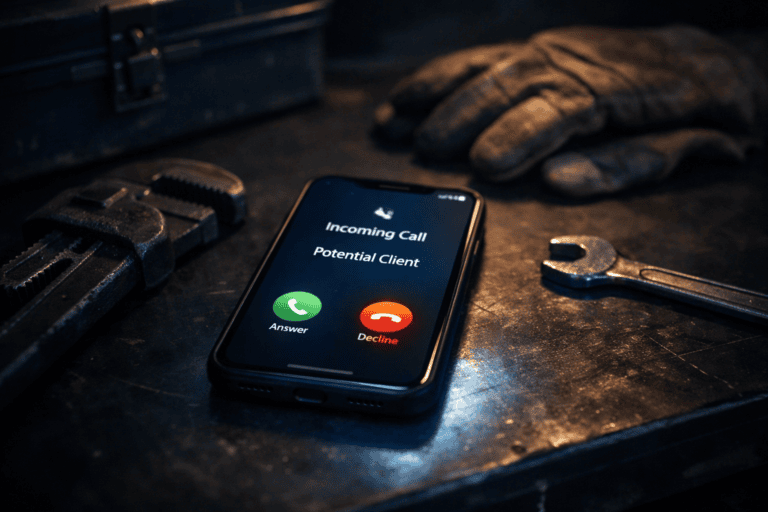
You’re under a sink at 2 PM when your phone rings. Then it rings again at 2:15. By 2:30, you’ve got three missed calls and no idea if any of them were actual jobs. Sound familiar?
For small trades shops running one to ten trucks, this is the daily grind. You can’t answer the phone when you’re torching pipe, pulling wire, or three stories up on a ladder. But every missed call is a potential customer going straight to your competitor’s voicemail — or worse, to a shop that actually picked up.
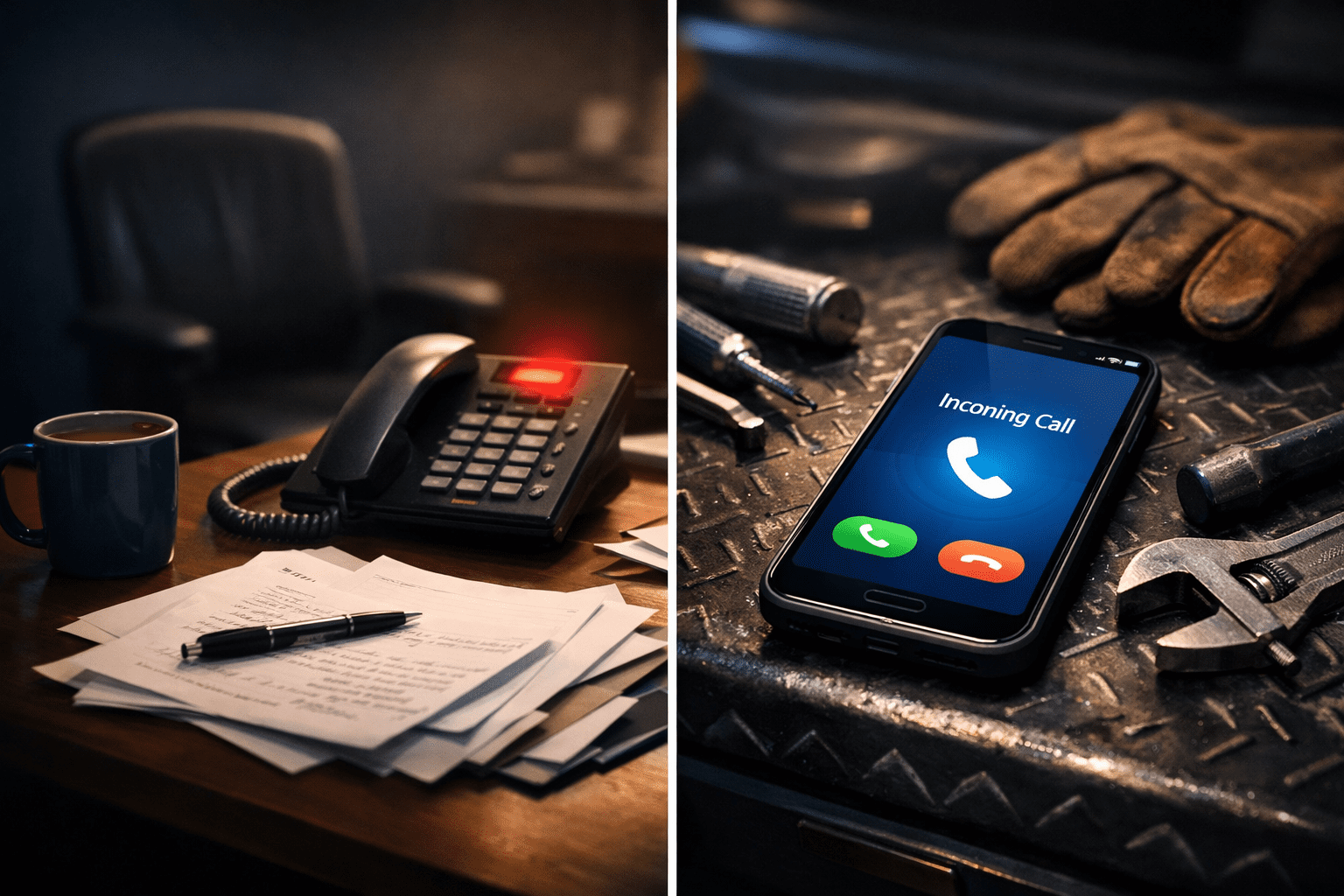
The old-school fix was simple: hire a dispatcher or receptionist. Someone to sit at a desk, answer calls, book jobs, and keep things moving while you’re in the field. But for most small shops, that math doesn’t add up anymore. A full-time dispatcher costs $35,000 to $50,000 a year, plus taxes, benefits, and the headache of managing another employee. And if you’re only running three trucks, that’s a tough pill to swallow.
That’s why more contractors are looking at AI receptionists as a real alternative. Not because they’re trendy or futuristic, but because they solve the core problem — missed calls — without the cost and complexity of hiring someone.
Let’s break down what actually makes sense for small shops.
The Real Cost of a Human Dispatcher
Before you compare options, you need to know what you’re actually spending. Hiring a receptionist or dispatcher isn’t just about salary. Here’s what it really costs:
- Base salary: $35,000 to $50,000 per year for a decent dispatcher in most markets
- Payroll taxes and insurance: Add another 15% to 20% on top of that salary
- Benefits: Health insurance, PTO, and sick days add thousands more
- Training and turnover: It takes weeks to get someone up to speed, and if they leave, you start over
- Office overhead: They need a desk, a computer, and a place to work
When you add it all up, a full-time dispatcher can easily cost you $45,000 to $60,000 a year. And they’re only working 40 hours a week. That means nights, weekends, and holidays are still on you — or they’re going to voicemail.
For shops doing $500,000 or more in revenue with steady inbound call volume, that investment can make sense. But if you’re running a smaller operation, or if your call volume is unpredictable, you’re paying for full-time help that you might not need full-time.
What an AI Receptionist Actually Does
An AI receptionist for contractors isn’t just a fancy answering machine. It’s a system that picks up your calls, talks to customers like a real person, and handles the work that used to require a human sitting at a desk.
Here’s what a good one does:
- Answers every call, 24/7: No missed calls. No voicemail. Someone — or in this case, something — picks up every time.
- Qualifies leads: Asks the right questions to figure out what the customer needs, where they are, and when they need service.
- Books jobs: Checks your calendar and schedules appointments without you lifting a finger.
- Routes emergencies: Knows the difference between a burst pipe and a routine tune-up, and gets urgent calls to you immediately.
- Notifies you in real time: Sends you a text or email summary after every call so you know what’s happening.
The key difference between an AI receptionist and a voicemail system is that it actually does something with the call. It doesn’t just record a message and wait for you to call back. It handles the intake, books the job, and keeps things moving while you’re working.
When a Dispatcher Still Makes Sense
Let’s be honest: AI isn’t the answer for everyone. There are situations where hiring a human dispatcher is still the smarter move.
If you’re running a bigger operation — say, eight to ten trucks — and you need someone managing schedules, coordinating crews, handling supplier orders, and putting out fires all day long, a dispatcher is worth the investment. They’re doing way more than just answering the phone.
And if your customer base skews older or expects a very high-touch experience, some of them might prefer talking to a person who knows them by name. That’s a judgment call you have to make based on your market.
But for most small shops, the honest question is this: Are you hiring a dispatcher because you actually need a full-time office manager, or are you just trying to stop missing calls?
If it’s the latter, an AI receptionist does the job for a fraction of the cost.
The Middle-Ground Option: AI First, Human Later
Here’s the move a lot of smart shop owners are making: Start with an AI receptionist to handle inbound calls and booking, then hire a part-time dispatcher when your volume justifies it.
This approach lets you grow without overcommitting. You’re not paying $50,000 a year before you’re ready. You’re covering your call overflow and after-hours leads right now, and when you hit the point where you need a human in the office full-time, you’ve already got the phone systems and processes in place to support them.
In other words, AI doesn’t have to replace humans. It just fills the gap until you’re big enough to need both.
What to Look for in an AI Receptionist for Contractors
Not all AI phone systems are built the same. Some are glorified voicemail transcription tools. Others are clunky chatbots that frustrate callers and send them running.
If you’re evaluating an AI receptionist, here’s what actually matters:
- Sounds like a real person: If it sounds robotic or scripted, customers will hang up. It needs to handle natural conversation.
- Integrates with your calendar: If it can’t book jobs directly into your schedule, it’s not saving you any time.
- Understands trades-specific language: It should know the difference between a service call, a quote request, and an emergency.
- Notifies you immediately: You should get a text or email the second a call comes in, with all the details.
- Works after hours: The whole point is covering nights, weekends, and times you can’t pick up.
And most importantly: it should be easy to set up. If it takes two weeks of IT work to get it running, it’s not built for small shops.
Stop Losing Jobs After Hours
The bottom line is this: You can’t grow if you’re missing calls. And you can’t answer the phone 24/7 while you’re running jobs, managing crews, and keeping the business moving.
Hiring a full-time dispatcher works for some shops, but for most small operations, it’s overkill. You need something that stops the bleeding — something that picks up every call, books the job, and lets you focus on the work.
That’s where an AI receptionist makes sense. It’s not about replacing people. It’s about making sure your phone works for you even when you’re on the roof, under a house, or finally sitting down for dinner.
Put Wrenchy to Work in Your Shop
If you’re done losing leads to voicemail and you’re not ready to hire a full-time dispatcher, it’s time to meet Wrenchy. He’s the AI answering agent built specifically for trades shops like yours. He picks up every call, qualifies leads, books jobs, and keeps you in the loop — all without you lifting a finger.
WrenchBot AI offers a 14-day free trial with no credit card required, and most shops are live within 24 hours. Stop missing calls. Start closing more jobs. Let Wrenchy handle the phone while you handle the work.