Missed Calls HVAC Business Cost
Every Ring You Don’t Answer Is Money Walking Away
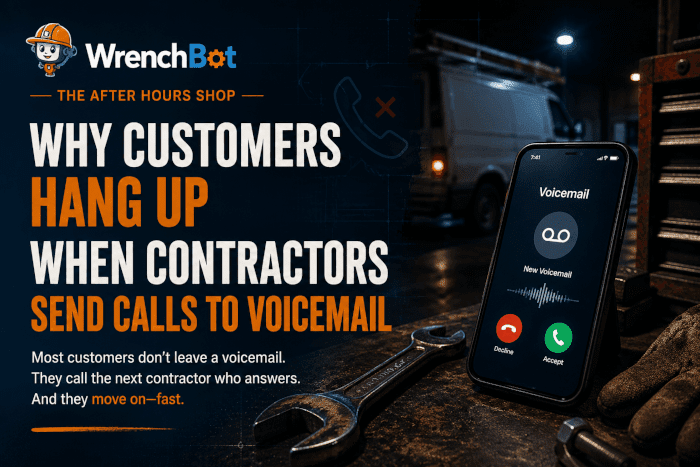
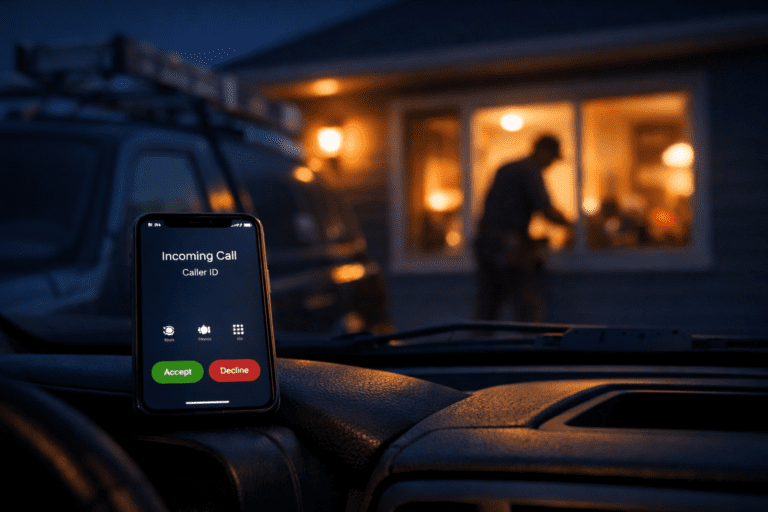
You’re knee-deep in a ductwork install when your phone buzzes for the fifth time. You can’t answer — you’re holding a torch, or you’re in an attic, or you’re elbow-deep in a compressor swap. By the time you climb down and check your messages, three of those calls went to voicemail. Two didn’t even bother leaving one.
Here’s what just happened: those callers moved on. They called the next HVAC company on Google. And that next company answered. You didn’t lose those jobs because you weren’t qualified or because your prices were too high. You lost them because you were doing the work you’d already sold.
Missed calls aren’t just an inconvenience. They’re a profit leak that most HVAC shop owners drastically underestimate. Let’s break down exactly how much each one of those missed calls is actually costing you — and what you can do about it without hiring a full-time receptionist or chaining yourself to your phone.
The Real Math Behind Missed Calls
Most HVAC businesses miss between 20% and 40% of their inbound calls during business hours. After hours and on weekends? That number climbs closer to 100%. If you’re running a small shop doing $500K to $1M in annual revenue, you’re probably getting somewhere between 300 and 600 inbound calls a year. Let’s be conservative and say you miss 25% of them — that’s 75 to 150 calls that never got answered.
Now let’s talk conversion. In the HVAC world, a decent close rate on qualified leads is around 30% to 40%. If even half of those missed calls were real leads (not spam or wrong numbers), you’re looking at 35 to 75 jobs you didn’t even get a chance to quote. If your average ticket is $800 for service calls and $4,000 for installs, and you assume a conservative mix, you’re leaving $50,000 to $100,000 on the table every year. Just from missed calls.
That’s not revenue you lost to a competitor who outbid you. That’s revenue you never even got to compete for.
Why “Call Back Later” Doesn’t Work Anymore
Ten years ago, a customer might wait a few hours for a callback. Maybe even until the next morning. Not anymore. Today’s homeowner has a busted AC in July or a furnace down in January, and they’ve got Google open on their phone. They’re calling down the list. The first company that picks up and sounds like they can help? That’s who gets the job.
You already know this. You’ve been on the other side of it — when you’re the one calling a supplier or a parts house, and nobody picks up, you don’t sit around waiting. You call the next guy.
Even if you do call back an hour later, the prospect is often already booked. You’re not competing on price or quality at that point. You’re competing on speed of response, and you’re losing before you even know there was a race.
The After-Hours Opportunity Nobody’s Capturing
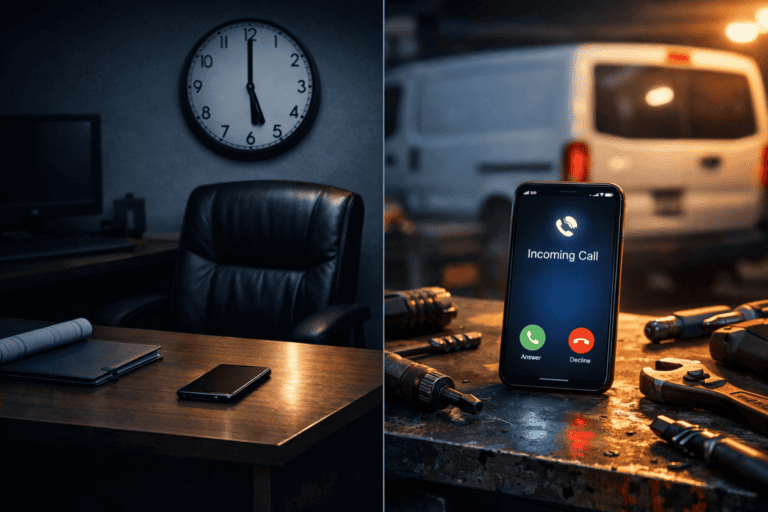
Here’s the kicker: some of the highest-intent, highest-value calls come in after hours. A homeowner whose AC just quit at 9 PM on a Saturday isn’t price shopping — they need help now, and they’re willing to pay for it. But if your phone goes to voicemail, they’re calling someone else. And that someone else is closing emergency service calls at premium rates while you’re at home with your phone on silent.
The same goes for early mornings, Sundays, and holidays. These are the calls where customers are most motivated and least price-sensitive. And most small HVAC shops are leaving all of that revenue on the table because they’re not set up to answer 24/7.
You Can’t Hire Your Way Out of This (But You Can Fix It)
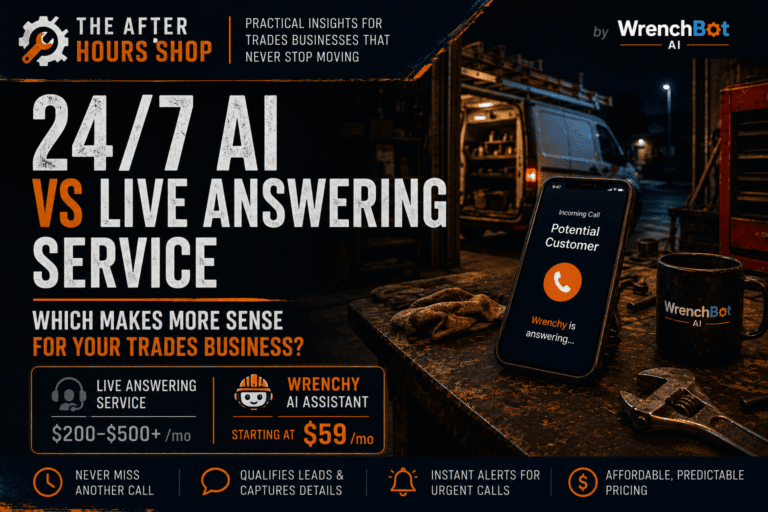
The obvious answer is to hire someone to answer the phones. But let’s be honest — for a small shop, that doesn’t pencil out. A full-time receptionist costs $35,000 to $45,000 a year, plus taxes and benefits. And unless you’re paying for multiple shifts, you’re still missing after-hours calls. An answering service might be cheaper, but most of them just take messages. They’re not qualifying leads, they’re not booking jobs, and they’re definitely not making your callers feel like they reached a real business.
What you actually need is someone who picks up every call, knows how to talk to your customers, qualifies the lead, books the job if it’s a fit, and gets you the details in real time so you can follow up fast on the ones that need your attention.
That’s where Wrenchy comes in. He’s WrenchBot AI’s answering agent, and he works for your HVAC shop the same way a solid CSR would — except he never takes a lunch break, never calls in sick, and he’s on the clock 24/7. When a call comes in, Wrenchy picks up. He asks the right questions, figures out what the customer needs, and either books the appointment directly into your calendar or flags it as an emergency and notifies you immediately. You get a text or email summary of every call, so you’re always in the loop.
He’s not a voicemail system. He’s not a chatbot that frustrates people. He handles conversations the way a trained team member would — professionally, naturally, and with enough sense to know when to loop you in.
What Happens When You Stop Missing Calls
When your phone gets answered every time it rings, a few things happen fast:
- You capture jobs you used to lose by default. No more missed calls turning into missed revenue.
- You book more after-hours and emergency work. The high-margin calls that other shops are sleeping through.
- You spend less time playing phone tag. Wrenchy qualifies the lead up front, so you’re only calling back the ones worth your time.
- Your close rate goes up. Faster response times mean prospects are still hot when you follow up.
- You look bigger and more professional than you are. Customers don’t know you’re a two-truck shop when every call gets answered promptly and professionally.
This isn’t theory. It’s basic business math. Answer more calls, book more jobs, make more money. The only question is whether you’re willing to let the problem keep costing you, or whether you’re ready to fix it.
Put Wrenchy to Work in Your Shop
If you’re tired of losing jobs to missed calls, it’s time to bring Wrenchy onto your team. WrenchBot AI is built specifically for trades businesses like yours — no fluff, no complicated setup, no long-term contracts. You get a 14-day free trial, no credit card required, and most shops are up and running within 24 hours. Wrenchy starts answering your calls immediately, and you’ll see exactly how many jobs you were leaving on the table. Try it risk-free and see what happens when your phone actually works for you — even when you’re on a roof, in a crawl space, or finally taking a day off.