Can an AI Really Handle Emergency Calls?
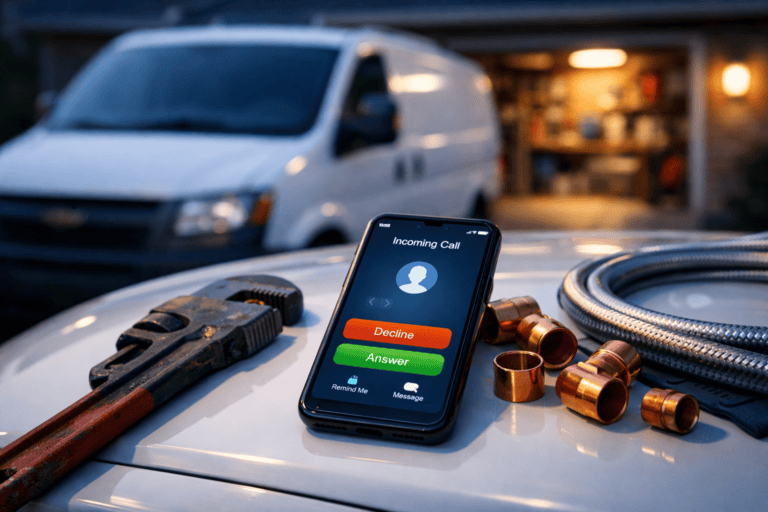
It’s 2 a.m. on a Tuesday. A homeowner’s water heater just burst and flooded their basement. They’re panicking, scrolling through Google, and calling every plumber they can find. Your truck is parked in your driveway. Your phone is on silent. And by the time you wake up, they’ve already booked someone else.
You didn’t lose that job because you weren’t qualified. You lost it because you didn’t answer.
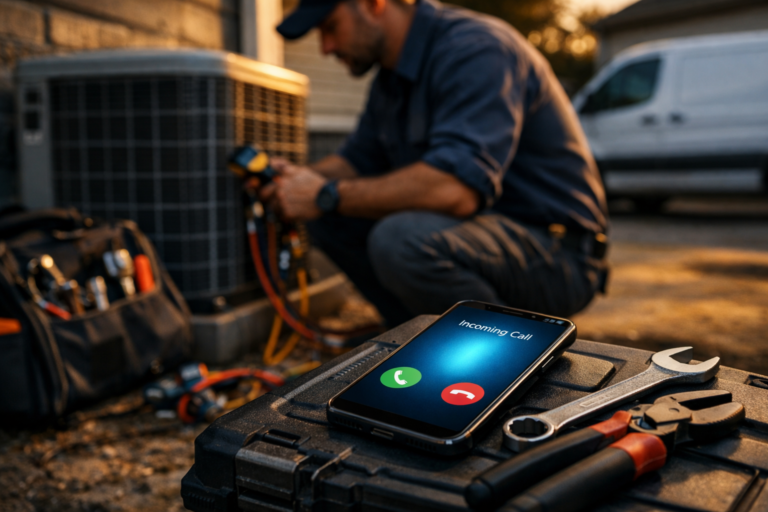
For small trades shops, missing calls means missing revenue. But you can’t be glued to your phone while you’re under a sink, on a roof, or wiring a panel. And hiring someone just to pick up the phone? That’s a full salary, benefits, and managing another person — which most one- to ten-truck shops can’t justify.
So the question becomes: can an AI actually handle the high-stakes, time-sensitive chaos of an emergency call? Can it tell the difference between a leaky faucet and a gas leak? Can it route the right call to the right person without making you look like you’re running your business through a robot?
The short answer is yes — but only if it’s built right. Here’s what you need to know about AI emergency call routing and whether it’s worth your time.
What Makes Emergency Calls Different
Not every call is created equal. When someone calls about scheduling a tune-up next month, there’s room for error. But when they’re calling because their AC died in July or there’s water pouring through their ceiling, every second counts. The caller is stressed, the job is urgent, and they need to know someone is on it — now.
That means any system handling emergency calls needs to do three things well:
- Recognize urgency. It has to understand the difference between “my pilot light went out” and “I smell gas.”
- Collect the right information fast. Address, contact info, description of the problem — no endless phone trees or irrelevant questions.
- Get you notified immediately. You need to know about the call in real time, not three hours later when you check your dashboard.
Most generic AI phone systems fail here because they treat every call the same. They’re built for customer service queues, not for trades businesses where timing and judgment matter.
How AI Emergency Call Routing Actually Works
When done right, AI emergency call routing isn’t about replacing your judgment — it’s about making sure you never miss the chance to use it.
Here’s how it works in practice. A homeowner calls your number at 9 p.m. because their furnace quit and it’s 30 degrees outside. Instead of hitting voicemail, they reach Wrenchy, WrenchBot’s AI answering agent. He picks up on the first ring, asks what’s going on, and gathers the details — name, address, nature of the emergency.
Wrenchy recognizes this is urgent. He doesn’t try to book it for next Thursday. He confirms the caller’s info, reassures them that someone will get back to them right away, and immediately sends you a notification — text, email, or both, depending on how you’ve set it up. You get the full rundown in seconds and can call the customer back directly or dispatch a tech if you’ve got one on call.
The homeowner feels heard. You don’t lose the job. And you didn’t have to hire a night shift receptionist to make it happen.
What About False Alarms and Bad Routing?
This is the part that makes trades owners skeptical, and rightfully so. If an AI can’t tell a real emergency from someone who just wants to chat about a quote, you’re going to waste time, burn out your on-call techs, or worse — ignore a real crisis because you’ve been conditioned to tune out the noise.
The key is in how the system is trained. Generic phone bots don’t understand trades language. They don’t know that “no hot water” might be routine maintenance or a safety issue depending on the details. They don’t know that “sparking outlet” means drop everything, while “tripped breaker” can usually wait until morning.
Wrenchy is built specifically for trades businesses. He’s trained to ask the right follow-up questions and route calls based on actual urgency, not keywords. That means fewer false alarms, better information when you do get pinged, and more trust from customers who feel like they’re talking to someone who gets it.
Does It Actually Save You Money?
Let’s talk numbers. A missed emergency call isn’t just one lost job — it’s often a high-ticket job. Furnace replacements, emergency leak repairs, after-hours electrical work — these aren’t $75 service calls. They’re $500, $1,500, sometimes more. Miss two or three of those a month and you’re leaving serious money on the table.
Meanwhile, hiring a live answering service that actually understands your business costs anywhere from $300 to over $1,000 a month. And even then, they’re not available 24/7 unless you’re paying top dollar. A full-time employee? You’re looking at $30,000 to $40,000 a year, minimum, just to cover the phones.
AI emergency call routing costs a fraction of that and works around the clock. No sick days, no turnover, no training someone new every six months. You’re answering every call without adding overhead.
What It Feels Like for the Customer
Here’s the thing trades owners sometimes overlook: your customer doesn’t care whether a human or an AI answers the phone. They care whether someone competent picks up, takes them seriously, and gets them help.
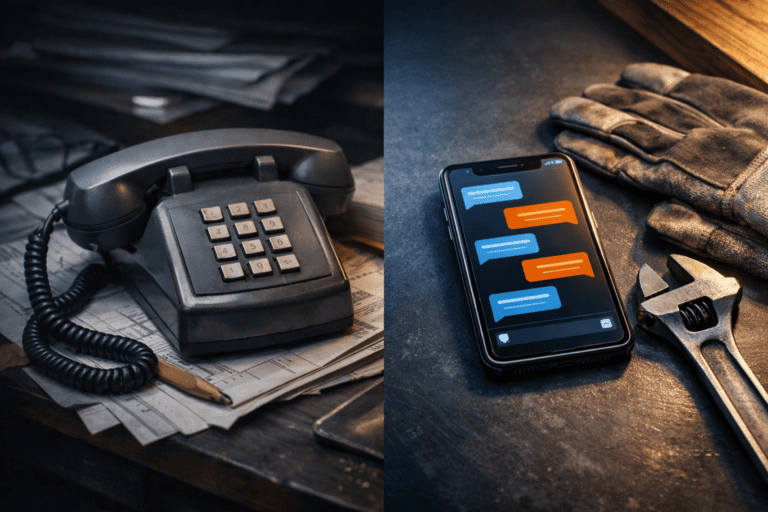
When a homeowner calls in a panic and reaches a professional voice that listens, asks smart questions, and promises follow-up, they’re relieved. When they hit voicemail or get bounced to a generic menu, they move on to the next number.
Wrenchy doesn’t sound like a robot reading a script. He sounds like the first point of contact at a well-run shop — calm, clear, and efficient. And because he’s handling the intake, you’re free to focus on the actual work when you call the customer back or show up on-site.
Is It Right for Your Shop?
If you’re a solo operator or running a small crew, and you’re losing jobs because you can’t be in two places at once, AI emergency call routing makes sense. If you’re tired of playing phone tag, missing after-hours leads, or paying for a service that doesn’t understand your business, it’s worth testing.
The trade-off is simple: keep doing what you’re doing and accept that some calls will slip through, or let Wrenchy handle the front line so you can stay focused on the work that actually makes you money.
Put Wrenchy to Work in Your Shop
If you’re ready to stop losing emergency calls and start answering every lead — day or night — WrenchBot AI is built for shops like yours. Wrenchy picks up on the first ring, qualifies every caller, books jobs, and routes emergencies in real time. No voicemail. No missed revenue. No hiring.
You can try it free for 14 days. No credit card required. Most shops are up and running within 24 hours. If it doesn’t work for your business, walk away. But if it saves you even one high-ticket emergency call, it’s already paid for itself.
Get started at WrenchBot AI and see what it’s like when your phone finally works as hard as you do.